Case Study / 2025
Stack | Kimathi Flavien Motion Design Breakdown
A case study organized from Motionographer's behind-the-scenes interview with Kimathi Flavien about Stack, preserving the original case study's publicly available images and video embeds while documenting its creative process.
This page is a case study and learning record; it does not imply authorship of or authorization by the original project.
 View final film
Project Introduction
Case study page using the publicly available image URLs, Vimeo iframe, and VideoPress iframe from the original Motionographer article, without downloading or rehosting the media.
Stack | Kimathi Flavien Motion Design Breakdown
Reorganized around the media from the original Motionographer case study: preserving the original images, video embeds, and narrative order within this site's existing modules, with no custom-made illustrative graphics.
Final Film / Stack
Main Vimeo film at the top of the case study page
The video cannot be loaded right now.
If playback fails, use the original link.
Open original content ↗Project Introduction
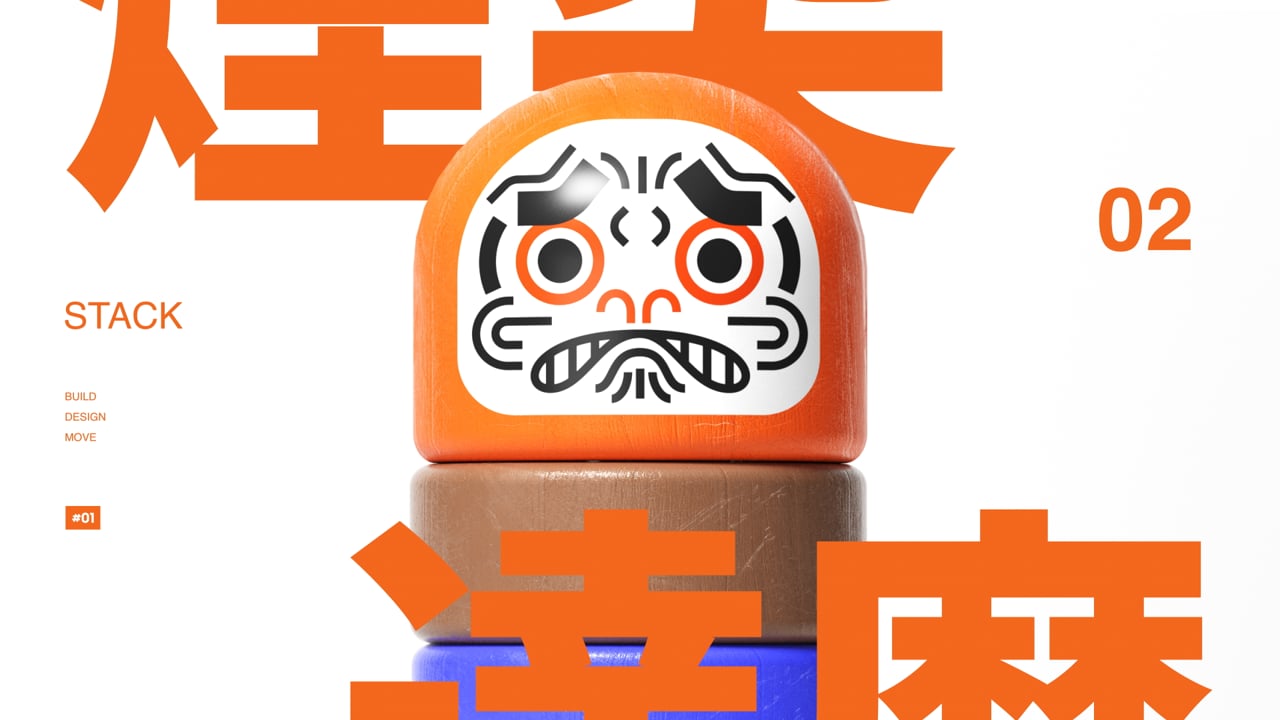
Stack is Kimathi Flavien's personal motion design film. It is described as a learning experiment that moves from 2D animation experience into 3D tools, using a lighthearted and playful approach to explore basic shapes, layouts, rhythm, sound, and 2D/3D hybrids.
This page uses publicly available images and video embeds from the case study, with the text summarized in Chinese so it can be browsed on this site as a case-study reference.
The Unserious Strength
VideoPress clip embedded in the Motionographer article.

The video cannot be loaded right now.
If playback fails, use the original link.
Open original content ↗Early sketches shown in the article, developing from simple scenes and relationships between shapes.
Building from One Scene at a Time
The original article notes that Kimathi moved the project forward by making 'at least one scene or layout a day.' Each fragment could be small; what mattered was continuing to accumulate material, then selecting and combining those images into a complete film.
This approach also applies to a portfolio: first organize the images, sketches, process, and rhythm into sections, then gradually fill in the verified content.
Creative Process / Overcoming Imposter Syndrome
Process video.

The video cannot be loaded right now.
If playback fails, use the original link.
Open original content ↗Experiments with shapes, layouts, and scene transitions from the case study.
Layout and board images from the case study, useful for observing how a large number of scenes were organized.
Wooden Toys, Bold Typography, and 2D/3D Hybrids
The visual emphasis is not on complex effects, but on materials, graphics, and the rhythm of transitions.
From Wooden Toys to Bold Typography
Video embed related to the visual style discussed in the article.

The video cannot be loaded right now.
If playback fails, use the original link.
Open original content ↗A group of visual reference images from the article, retained as external images to show the cited sources.
Reference images used in the article to illustrate bold typography, slicing, and visual tension.
Metronomes, Match Cuts, and Roller-Coaster Flow
The original article notes that the project needed a fast pace because its concept uses basic shapes to present a wide range of possibilities. Kimathi used a metronome to keep shot transitions consistent and match cuts to create continuity between shapes, motion, and sound across shots.
The rhythm is not completely even: rules create stability, while sudden changes create surprise. This section can serve as a reference when studying AE editing and transitions later.
Roller Coaster Flow / Balancing Predictability and Surprise
Video related to rhythm and transitions.

The video cannot be loaded right now.
If playback fails, use the original link.
Open original content ↗Final frames shown at the end of the article, retaining the original images as case-study references.
Sound Is Part of the Editing Structure, Not a Backdrop
The original article's sound-design section features work by Pierre-Alain Lécroart. The focus is not simply on adding music, but on letting drumbeats, sparse sound effects, synthesizers, and unexpected sounds support the visual rhythm together. Sound makes the rapid editing clearer and gives the characters and shots more memorable identities.
Sound Alchemy / The Sound of Stack
Video related to the sound design in the original article.

The video cannot be loaded right now.
If playback fails, use the original link.
Open original content ↗Project Attributes
- Project
- Stack
- Creator
- Kimathi Flavien
- Sound Design
- Pierre-Alain Lécroart
- Article
- Motionographer / Fermín Cimadevilla
- Source URL
- https://motionographer.com/2025/02/12/exclusive-kimathi-flavien-the-work-behind-of-chef-doeuvre-motion-design-film-stack/
Credits
A case study page that more closely reflects the media in the original article.
